
Buildings
Industrial Flex Space Roofing in Charleston, SC.
The flex building is the chameleon of the commercial roof world. The same shell that houses a light-manufacturing line this year might hold a distribution operation, a maker's workshop, a.
Request Roof WalkIndustrial Flex
Space Roofing
Roof Scope Notes
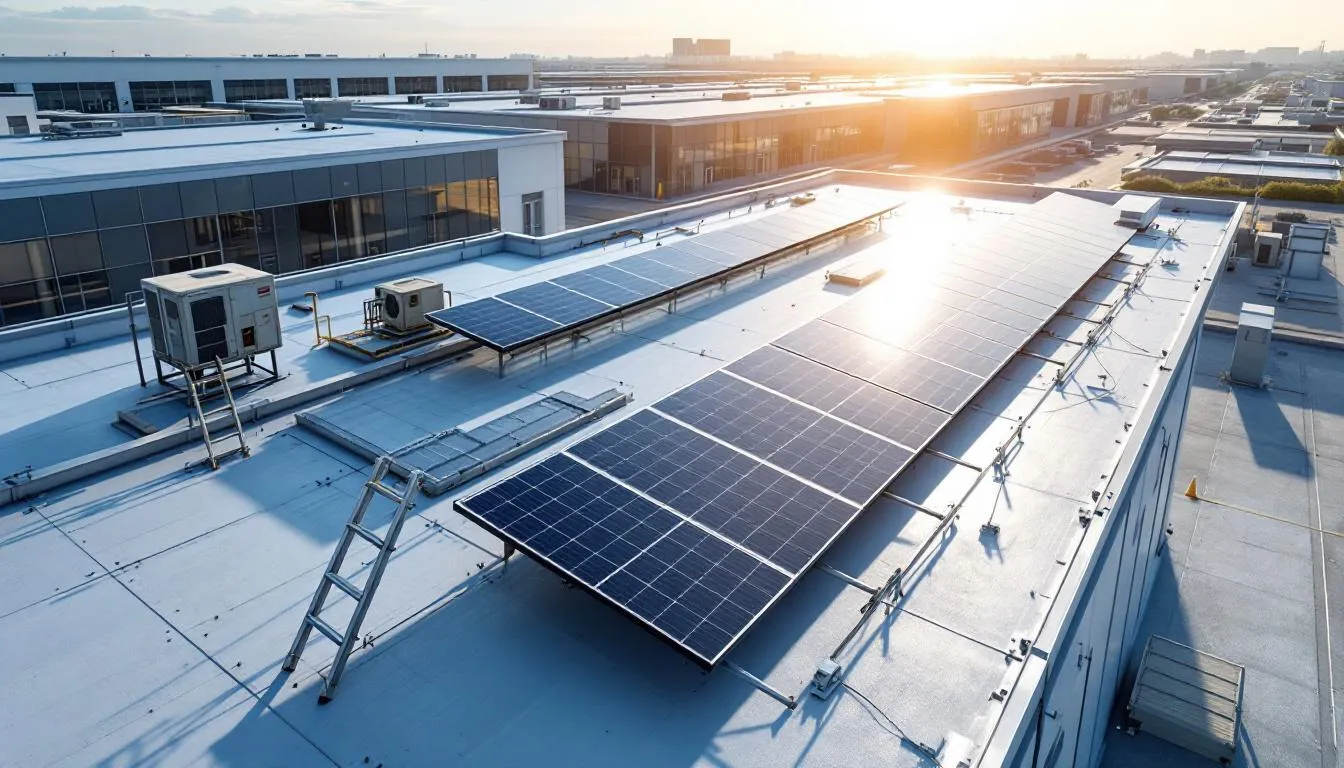
The flex building is the chameleon of the commercial roof world. The same shell that houses a light-manufacturing line this year might hold a distribution operation, a maker's workshop, a small lab, or three unrelated tenants behind demising walls next year. We roof and maintain flex buildings throughout the Charleston industrial market, from the older tilt-wall product around the Ashley Phosphate Road and Rivers Avenue corridors in North Charleston to the newer business parks filling in along Clements Ferry Road near the port and the flex inventory growing around Ladson and Summerville. What ties them together is a low-slope roof that has to keep performing while the building keeps reinventing what happens beneath it.
A single-user industrial roof changes slowly. A multi-tenant flex roof changes every time a new lease is signed. Each fit-out tends to add a rooftop unit, punch a new conduit or refrigerant run through the membrane, and set equipment that was never part of the original loading plan, and most of those changes never make it into the property records. That is why every flex project we take on starts with a penetration inventory: we walk the roof, photograph and map every curb, vent, pipe, and abandoned opening, and compare it to the original drawings where they exist. On a flex building that survey is not optional housekeeping, it is the only way to know what is actually up there before a sheet comes off.
Years of tenant turnover leave a flex roof dotted with curbs from equipment that is long gone. Each one is a leak waiting to happen if it was simply capped and forgotten. We identify the dead penetrations, properly cut them in or remove and infill them, and bring the field of the roof back to a clean, continuous plane rather than working around a decade of leftovers.
Flex stock in Charleston runs the full age range, from 1970s tilt-wall carrying tired built-up roofs to modern pre-engineered metal buildings with standing-seam panels. The right reroof depends on the deck, the existing assembly, and how much disruption the current tenants can absorb:
Because nobody can predict the next tenant's mechanical needs, we favor an assembly and a layout that leave room for future penetrations to be added cleanly under warranty rather than cut in haphazardly.
The most dangerous moment in a flex roof's life is between tenants. When a unit moves out and pulls its rooftop equipment, the open curbs often get a temporary cap that does not survive the first couple of real Charleston rains. An empty bay also collects debris far faster than an occupied one, and clogged drains over a vacant unit can pond and back up unnoticed for weeks. Our lease-transition inspections confirm every curb cap, verify former-tenant penetrations are properly sealed, and clear the drains, so a vacant bay does not quietly turn into water damage that greets the next tenant.
Working over an occupied multi-tenant building means managing people as much as membrane. We start from a bay-by-bay occupancy map and contact list from property management, identify which tenants have live rooftop equipment and which are sensitive to noise or HVAC downtime, and route all communication through the property manager rather than fielding requests from individual tenants on the roof. Each section is dried in before we leave it, which on a Lowcountry afternoon means staying ahead of the storms that build almost daily through the summer.
Questions Building Owners Ask
Related Roof Planning
Funeral Home & Mortuary Roofing
A funeral home cannot reschedule a visitation because there is a roofing crew on site, and that single fact shapes everything we do on these buildings. We roof mortuaries, funeral chapels,.
Quick-Service Restaurant & Fast-Food Roofing
Charleston's commercial corridors stretch along the I-26 and I-526 industrial ring, the Ashley Phosphate Road commercial belt, and the rapidly expanding Summerville and Goose Creek.
Cold Storage Roofing
A Charleston buyer searching for Cold Storage Roofing usually needs an answer that can survive budget review, not a vague promise. On a cold storage roofing call, we ask for roof age, leak.
K-12 School Roofing
A roof problem above building owners and operations teams can stall a Lowcountry building before anyone has a clean scope, so we treat K-12 School Roofing as field work before product.
Data Center Roofing
For Warehouse Roofing, SC Ports states that one in nine South Carolina jobs is connected to the port and that SC Ports owns and operates the Port of Charleston. That Charleston Warehouse.
Edge Metal, Coping, and Gutters
We start Edge Metal, Coping, and Gutters work with the roof record, leak history, access point, and the people who will be disrupted if the job is handled casually. On a edge metal,.
Contact Us
Plan
With
Us.
Send the roof address, access notes, roof age if known, leak photos, and any operating limits below the roof. We will map the first roof walk around the building, weather window, and urgency of the issue.
Get In Touch