
Roof Work
Manufacturing Facility Roofing in Charleston, SC.
Volvo Cars' manufacturing plant in Berkeley County, South Carolina - the Swedish automaker's only North American production facility - represents the leading edge of advanced manufacturing.
Request Roof WalkManufacturing Facility
Roofing
Roof Scope Notes
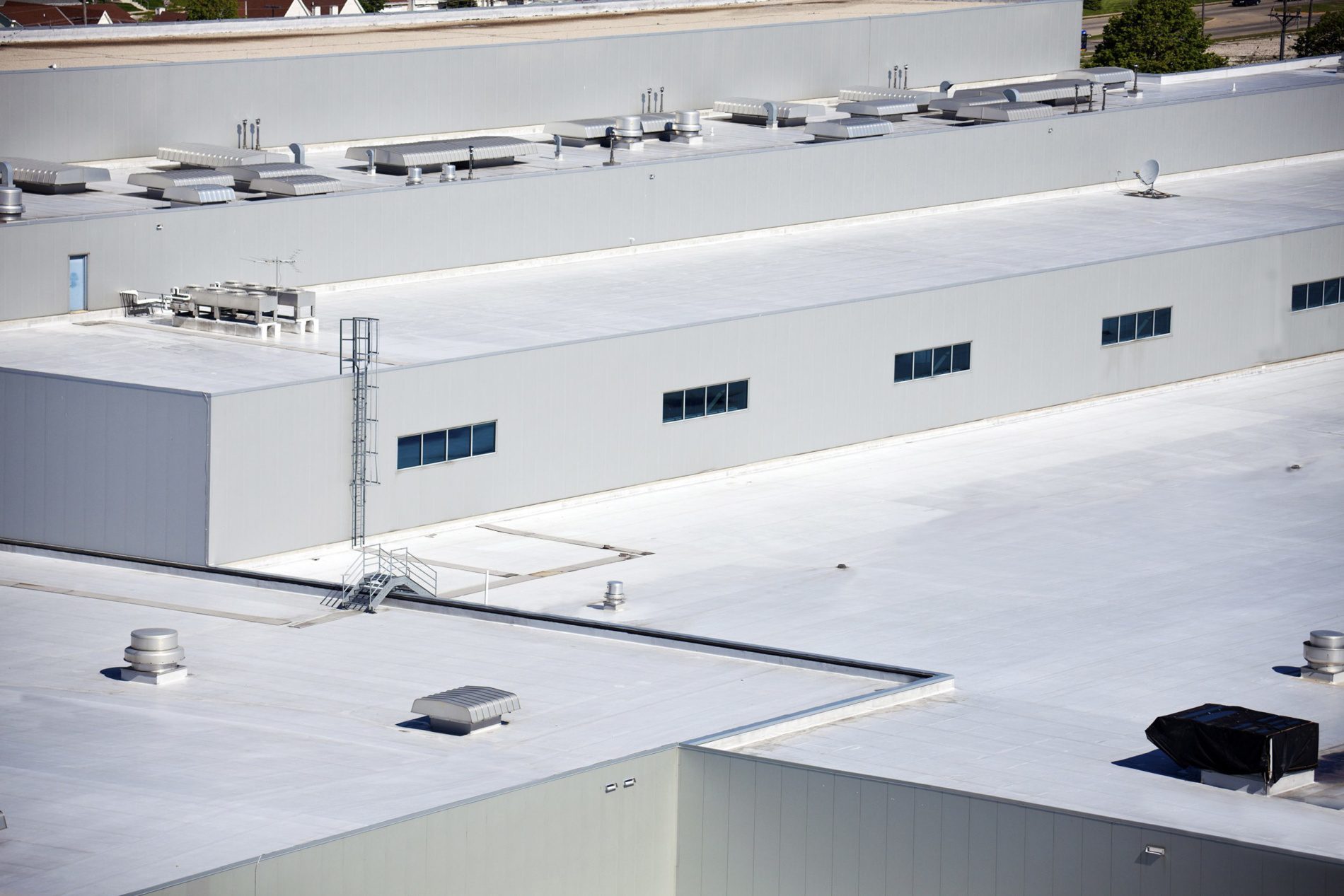
Volvo Cars' manufacturing plant in Berkeley County, South Carolina - the Swedish automaker's only North American production facility - represents the leading edge of advanced manufacturing investment in the Charleston region, and it sets the standard for what sophisticated roofing services look like in this market. The plant's roof system must accommodate large process ventilation arrays, paint shop exhaust stacks, and body shop welding fume extraction units, all of which create both penetration management challenges and membrane compatibility requirements that demand careful specification. As the Charleston metro continues to attract automotive suppliers, aerospace components manufacturers, and logistics operations, the demand for industrial roofing expertise that matches this level of complexity is growing steadily.
Charleston's coastal climate creates roofing challenges that differ fundamentally from the Rust Belt or the Mountain West. Salt air corrosion affects metal deck components, edge flashings, and fasteners. Hurricane-force wind events - this region of South Carolina is designated as a high-wind zone under ASCE 7 - require that all membrane attachment systems be engineered and tested to resist wind uplift loads that are substantially higher than what a standard commercial specification assumes. Roofing contractors working on Charleston manufacturing facilities must be fluent in FM Global or UL wind uplift ratings and must specify systems that are explicitly approved for the local design wind speed.
High humidity and heat are constants in the Charleston manufacturing environment for roughly eight months of the year. Roof surface temperatures on low-slope industrial buildings can exceed 175 degrees Fahrenheit during summer afternoons, and the thermal cycling between daytime peak and nighttime lows stresses membrane seams and penetration flashings repeatedly over the service life of the system. Reflective membrane surfaces and adequate insulation R-values help manage thermal stress, but they also reduce building cooling loads - an important consideration at Charleston facilities where air conditioning costs are a major operating expense.
Process exhaust management at Charleston's automotive and aerospace manufacturing facilities involves a diverse array of stack types. Paint shop ventilation at Volvo and its supplier network exhausts volatile organic compounds and isocyanates that are incompatible with standard membrane materials at sustained contact. Composite manufacturing operations at Boeing South Carolina and its supply chain generate carbon fiber particulates and epoxy-cure off-gases. Each stack type requires membrane and flashing specification that accounts for the specific exposure chemistry, and the contractor should request material safety data documentation for all process exhaust streams before finalizing a re-roof specification.
Skylights over production floors in Charleston's newer industrial facilities are typically modern polycarbonate or insulated glass assemblies, but the pace of construction in Berkeley and Dorchester counties means that some recently-built facilities already need skylight maintenance due to installation shortcuts during the original construction boom. Curb flashings and condensate drainage should be inspected annually, and any skylight showing delamination, hazing, or frame seal failure should be scheduled for replacement before it becomes a production-floor water intrusion event.
Drain and particulate management in Charleston's manufacturing corridor must account for stormwater quality requirements enforced by the South Carolina Department of Health and Environmental Control. Facilities with rooftop chemical exhaust exposure must ensure that drain field areas are designed to prevent contaminated runoff from reaching stormwater infrastructure. Specifying sealed drain covers and documenting drain field locations relative to process exhaust stacks is a basic due diligence step that experienced industrial roofing contractors build into every Charleston project scope.
Production schedule coordination at Charleston plants is generally more flexible than at comparable Rust Belt facilities because many of the buildings are newer and were designed with maintenance access as a consideration from the start. However, the rapid growth of the manufacturing sector means that facilities managers are often managing multiple capital projects simultaneously, and roofing work must be sequenced to avoid conflict with equipment installation, fire suppression upgrades, and other ongoing capital programs. A detailed project schedule submitted and approved before mobilization prevents the conflicts that derail projects at busy Charleston facilities.
Questions Building Owners Ask
Related Roof Planning
Drone & Thermal Roof Inspection
The distribution buildings going up around the Charleston Trade Center off I- share a problem: their roofs are too big to inspect well on foot. A single low-slope membrane can run several.
Acrylic and Silicone Roof Coatings
The first useful note for Acrylic and Silicone Roof Coatings is written at the roof hatch, after we see drainage, traffic, equipment, and how the building is used. On a acrylic and.
Hurricane Roof Damage Repair
A Charleston buyer searching for Hurricane Roof Damage Repair usually needs an answer that can survive budget review, not a vague promise. On a hurricane roof damage repair call, we ask.
Industrial and Warehouse Roofing
The first useful note for Industrial and Warehouse Roofing is written at the roof hatch, after we see drainage, traffic, equipment, and how the building is used. On a industrial and.
Retail and Shopping Center Roofing
Charleston's retail market reflects the city's dual identity as both a historic coastal destination and a rapidly growing regional commercial hub. King Street's boutique retail corridor.
TPO Single-Ply Roofing
A roof problem above facility managers and commercial roof buyers can stall a Lowcountry building before anyone has a clean scope, so we treat TPO Single-Ply Roofing as field work before.
Contact Us
Plan
With
Us.
Send the roof address, access notes, roof age if known, leak photos, and any operating limits below the roof. We will map the first roof walk around the building, weather window, and urgency of the issue.
Get In Touch