
Roof Work
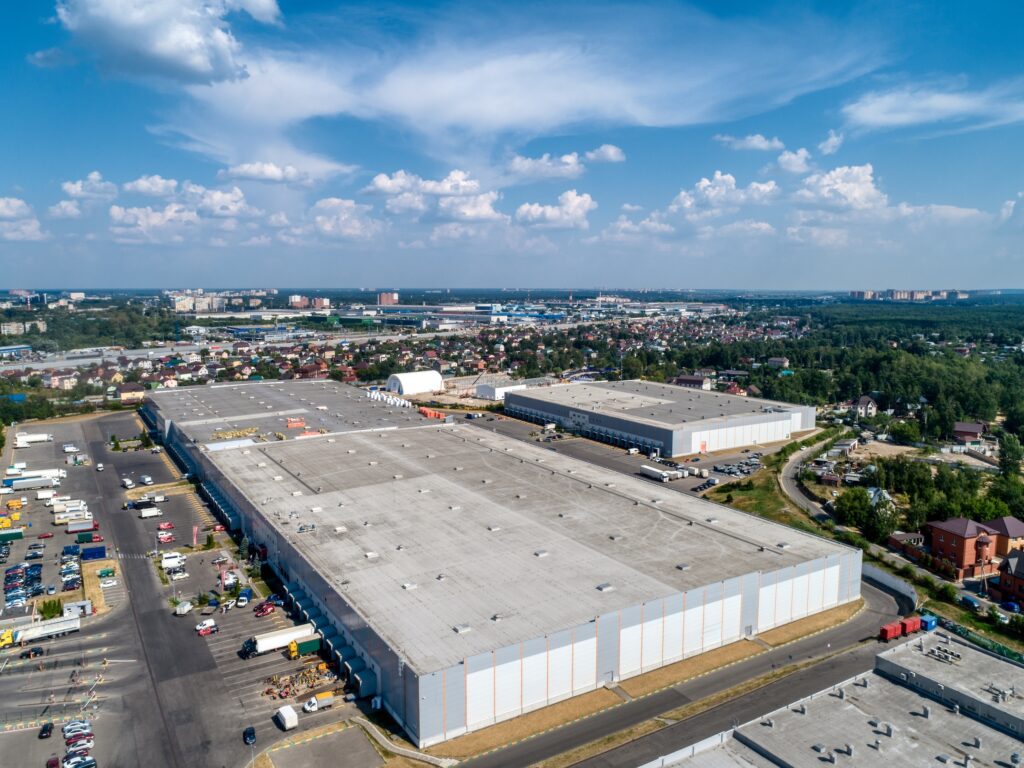
Warehouse and Distribution Center Roofing in Charleston, SC.
The Volvo Cars manufacturing complex in Berkeley County and the Amazon Fulfillment Center in Summerville have made the Charleston tri-county area one of the Southeast's most active.
Request Roof WalkWarehouse and
Distribution Center Roofing
Roof Scope Notes
The Volvo Cars manufacturing complex in Berkeley County and the Amazon Fulfillment Center in Summerville have made the Charleston tri-county area one of the Southeast's most active industrial real estate markets, drawing major 3PL operators like Ryder and XPO Logistics to purpose-built distribution centers along the I-26 and I-526 corridors. For warehouse owners and operators in the Lowcountry, roofing is not a simple commodity purchase-it is a critical building system that must be specified and installed to withstand hurricane-force winds, extreme heat, high humidity, and a coastal environment that accelerates the degradation of substandard materials.
Drainage engineering for Charleston warehouse roofs must address both the city's extraordinary annual rainfall-approximately 51 inches per year-and the risk of surge-level events associated with tropical systems. Roof drains on large distribution buildings must be positioned and sized to handle ASCE 7 design rainfall intensities for the Charleston coastal zone, which exceed those used in inland markets, and secondary scupper provisions must be designed with sufficient aggregate flow capacity to handle the volume of water that arrives during a multi-hour hurricane outer-band rainband. Interior drain leaders must be routed away from loading dock areas where back-flooding from blocked municipal storm systems is a known event risk during major tropical weather.
TPO membrane is the dominant specification for Charleston warehouse roofs because its heat-welded seams provide superior wind uplift resistance compared to adhesive-bonded systems, and its bright white surface meaningfully reduces solar heat gain in a market where cooling loads drive energy costs year-round. FM 4470 and FM 4450 wind uplift approvals are required on most Lowcountry warehouse projects because commercial property insurance carriers serving the coastal South Carolina market mandate them as a condition of coverage. A 60-mil or 80-mil TPO installed over polyisocyanurate insulation, with a mechanically attached base layer and adhered cap layer, is the assembly most frequently specified to meet both the FM wind uplift and the reflectance requirements in Charleston County.
Dock door and truck court flashing in the Charleston climate faces humidity-driven challenges that northern markets do not share. The combination of high ambient humidity, tropical rainfall, and the heat cycling of metal dock door frames and exterior CMU wall panels creates conditions under which adhesive-based flashings can delaminate over three to five years if products not rated for high-humidity applications are used. Charleston warehouse roofers specify fully welded TPO flashing at dock wall transitions where the budget allows, eliminating adhesive bond lines entirely and providing a continuous waterproofing membrane from the field roof down through the termination bar at the dock door frame.
Rooftop ventilation equipment on Charleston distribution centers includes HVAC curbs, industrial exhaust fans, and-particularly relevant for the area's growing cold-chain logistics sector-refrigeration equipment serving increasingly common temperature-controlled distribution spaces. Each penetration must be flashed to accommodate the thermal movement of refrigeration equipment rooftop units, which cycle on and off throughout the day and generate significant curb temperature changes that stress non-flexible flashing materials. The coastal salt air environment also accelerates corrosion on unpainted steel curb components, making stainless steel or pre-painted galvanized the appropriate specification for any curb or equipment support installed within five miles of tidal water.
Wind uplift is the defining structural concern for Charleston warehouse roofs, not snow load. ASCE 7 wind speed maps assign Charleston a basic wind speed of 130 mph or higher depending on exact location, which translates to very high FM design pressure requirements. Fastener patterns for mechanically attached single-ply systems must be calculated for the field, perimeter, and corner zones separately, with corner zones often requiring fastener spacing of six inches or less. Building owners leasing space to logistics tenants should verify that their roof assembly carries a current FM approval certificate, as loss of FM certification can trigger insurance premium increases or coverage gaps.
Energy efficiency in Charleston's hot and humid climate is overwhelmingly dominated by cooling load reduction. A white TPO or fleece-backed TPO membrane on a Charleston warehouse can reduce roof surface temperatures by 40 to 60 degrees Fahrenheit compared to a dark BUR or modified bitumen surface, directly reducing air conditioning load in the dock and office areas beneath the deck. South Carolina energy code requires minimum insulation R-values for commercial roofs, and polyisocyanurate board at R-20 to R-25 is the typical specification for a large distribution building in the tri-county area, with thicker insulation packages increasingly common as energy cost forecasting makes higher R-values economically attractive.
Questions Building Owners Ask
Related Roof Planning
Occupied Building Re-Roofing
For Roof Recover and Overlay, SC Ports states that one in nine South Carolina jobs is connected to the port and that SC Ports owns and operates the Port of Charleston. That Charleston Roof.
Modified Bitumen Roofing
A Charleston buyer searching for Modified Bitumen Roofing usually needs an answer that can survive budget review, not a vague promise. On a modified bitumen roofing call, we ask for roof.
Commercial Roof Inspection
The first useful note for Commercial Roof Inspection is written at the roof hatch, after we see drainage, traffic, equipment, and how the building is used. On a commercial roof inspection.
Insulation and Recovery Board
A Charleston buyer searching for Insulation and Recovery Board usually needs an answer that can survive budget review, not a vague promise. On a insulation and recovery board call, we ask.
Office Building Roofing
The Harbour View office campus in Mount Pleasant and the Dunes West corporate park in the growing East Cooper submarket represent the Class A office environment that Lowcountry building.
Commercial Solar Roof Integration
Every commercial array in the Lowcountry is mounted to a roof, and yet the roof is the part of the project that gets the least attention until something goes wrong. We are roofers, not a.
Contact Us
Plan
With
Us.
Send the roof address, access notes, roof age if known, leak photos, and any operating limits below the roof. We will map the first roof walk around the building, weather window, and urgency of the issue.
Get In Touch